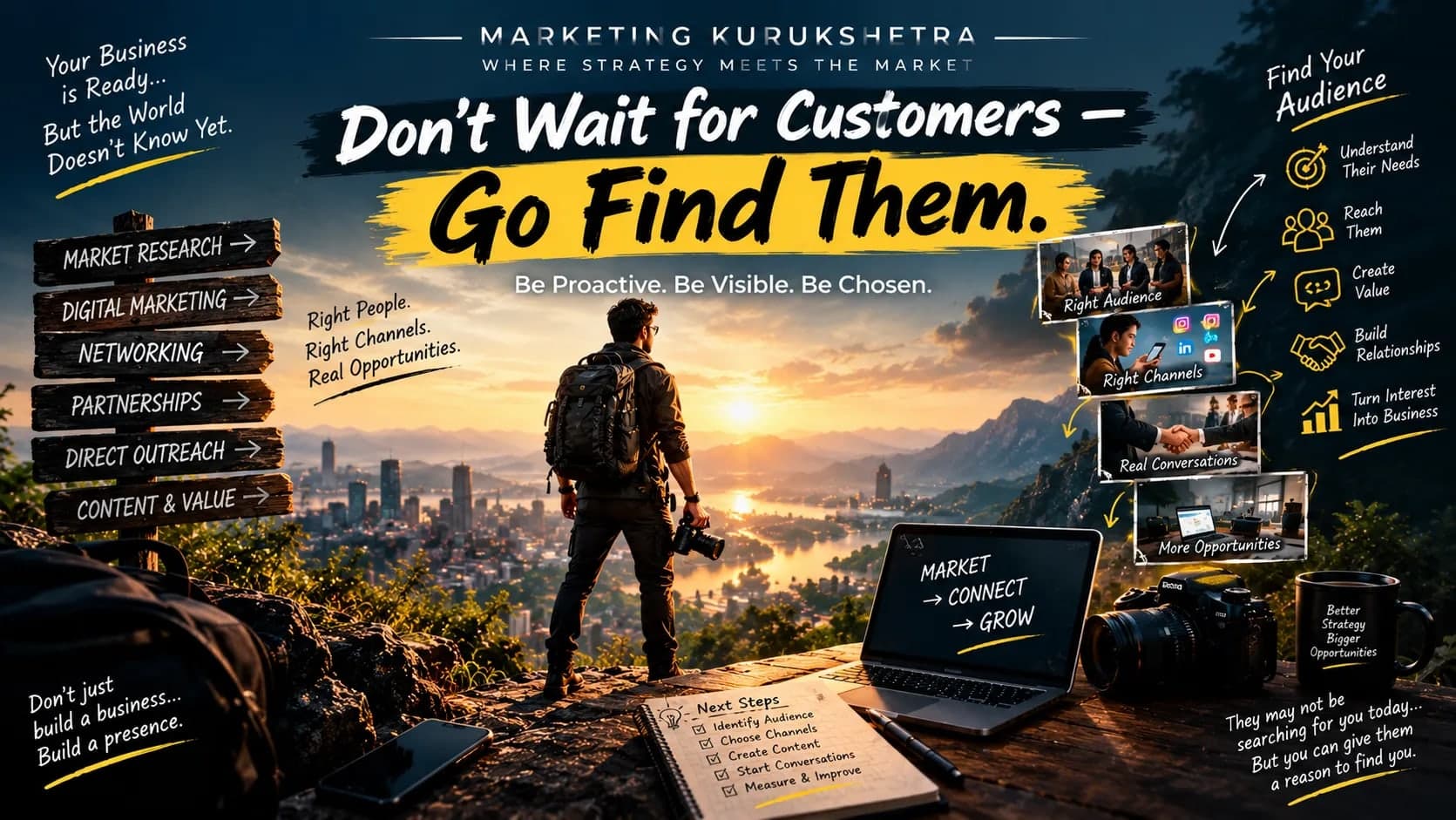
The Market Doesn't Owe You Attention
Many entrepreneurs spend months building a product, perfecting a service, designing a website, and preparing for launch. They invest their money, energy, and expectations into creating something valuable.
Then they open their doors and wait.
They expect customers to arrive because the product is good, the service is professional, or the business deserves a chance. When enquiries remain slow, frustration begins. They question the market, reduce their prices, or assume people simply aren't interested.
But a valuable product and a visible business are two different things.
Customers cannot choose a business they have never discovered. They cannot appreciate an offering they don't understand. And they cannot trust a brand they have never had an opportunity to evaluate.
The responsibility of a business is not only to create value. It is also to communicate that value to the people who need it.
Building the business is your first responsibility. Bringing it into the market's awareness is your next.
Stop Waiting for Discovery. Start Creating It.
Marketing should not begin only when sales become disappointing. It should be part of the business strategy from the beginning.
Before launch, identify where your potential customers spend their time, what information influences their decisions, and which channels can help you reach them.
For one business, this may mean publishing educational content and building a professional presence on social media. For another, it may involve direct outreach, industry events, partnerships, demonstrations, or conversations with potential clients.
There is no universal channel that works for every business. What matters is choosing the channels that connect your offering with the people most likely to value it.
Consider a new commercial photography company. It can wait for brands to discover its website, or it can proactively identify businesses that need better visual communication, develop a relevant portfolio, approach potential clients professionally, and demonstrate how strong photography can support their marketing.
The second approach does not guarantee immediate sales. It does, however, create more opportunities for discovery, conversation, feedback, and learning.
You cannot control every customer's decision, but you can control whether you make a serious effort to reach them.
Give Before You Ask
One of the biggest mistakes in marketing is approaching every interaction with the intention of making an immediate sale.
Customers are not simply waiting for another business to tell them what to buy. They are trying to solve problems, reduce uncertainty, compare alternatives, and make decisions they feel confident about.
Your communication should help them do that.
Share useful knowledge. Explain common mistakes. Demonstrate your expertise. Show examples of your work. Answer the questions customers genuinely ask before making a purchase.
A business selling professional lighting equipment, for example, can educate customers about choosing modifiers, understanding light quality, and setting up different shooting environments. That content may help people long before they are ready to buy.
When your brand consistently provides relevant value, potential customers gain an opportunity to understand your expertise without being pressured into a purchase.
This does not mean giving away everything for free or avoiding sales conversations. It means recognising that trust often develops before a customer is ready to commit.
When the buying decision finally arrives, your business may already be familiar to them.
Build Relationships, Not Just Reach
Views and followers can indicate visibility, but they do not automatically create business.
A thousand people seeing your content may be less valuable than ten relevant decision-makers understanding your offering and expressing genuine interest.
This is why effective marketing must go beyond broadcasting messages. It must create opportunities for meaningful interaction.
Talk to potential customers. Respond thoughtfully to enquiries. Build relationships with complementary businesses. Ask satisfied clients for referrals. Follow up professionally with people who have shown genuine interest.
Not every conversation will become a sale, and not every relationship will produce an immediate opportunity. But these interactions can help you understand the market, improve your approach, and build a network around your business.
The objective is not to chase every person who might buy from you. It is to make it easier for the right people to discover, understand, and trust what you offer.
Turn Activity Into a Repeatable System
Marketing becomes more effective when it moves beyond occasional bursts of enthusiasm.
Create a practical system for reaching your audience, communicating value, following up on enquiries, and evaluating results. Decide what you will publish, whom you will contact, which partnerships you will explore, and how you will measure progress.
Track meaningful outcomes: qualified enquiries, conversations with potential buyers, conversion rates, repeat customers, and the cost of acquiring business.
If a channel creates attention but no relevant interest, investigate why. If a particular message attracts the right audience, learn what makes it effective. If customers repeatedly raise the same concern, improve your communication or offering.
You don't need to spend recklessly to make progress. Small, consistent experiments can reveal where your effort is most productive before you commit larger resources.
Marketing is not about doing everything at once. It is about discovering what works, learning from the evidence, and improving your strategy over time.
Enter the Market With Intention
Your business cannot grow entirely on the assumption that customers will eventually find their way to you.
You must understand where they are, communicate why your offering matters, create opportunities for discovery, and give people a reason to take the next step.
Some will notice you and move on. Some will become curious. Some will ask questions, compare alternatives, and return later. Others may never become customers.
That is part of doing business. Your responsibility is to create enough meaningful opportunities for the right people to discover your value.
“Don't build a business and wait for the world to knock on your door. Step into the market, start meaningful conversations, and make your value visible. Because customers may not be searching for your brand today—but your strategy can give them a reason to discover it tomorrow.”